 Elite Steel
Elite Steel
Elite Steel
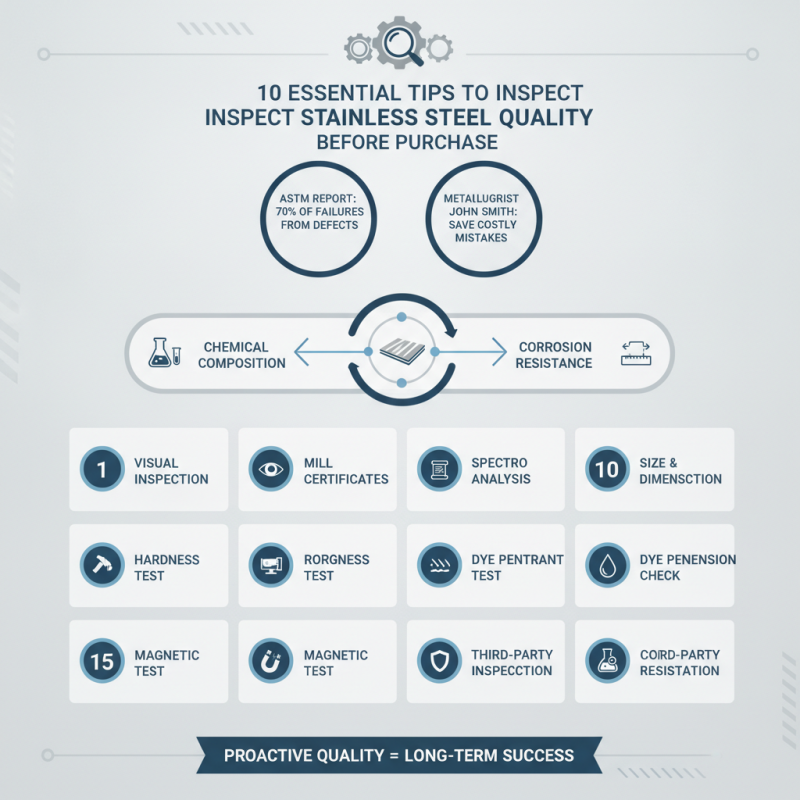
In today's manufacturing landscape, the importance of stainless steel quality cannot be overstated. A recent industry report from the American Society for Testing and Materials (ASTM) revealed that over 70% of structural failures stem from material defects. Understanding "how to inspect stainless steel quality before purchase" is crucial for manufacturers and construction professionals.
Expert metallurgist John Smith states, "A mindful approach to steel quality inspection can save companies from costly mistakes." His insights emphasize the need for precise standards. Quality assessment starts with factors like chemical composition, surface finish, and corrosion resistance. These characteristics not only affect performance but also longevity in demanding environments.
The market is flooded with options, making it daunting to choose the right stainless steel. Inconsistencies in quality can lead to critical failures. It's vital to have a set of inspection criteria. Without a robust quality check, businesses risk compromising their projects and reputations. A proactive stance towards quality ensures long-term success and reliability in the field.
When selecting stainless steel, understanding the different grades is crucial. Each grade has specific properties that affect its durability, corrosion resistance, and suitability for various applications. Common grades like 304 and 316 offer varying levels of resistance to rust and oxidation. Grade 304 is versatile but may not withstand harsh environments as well as 316, which is ideal for marine applications. Knowing these grades helps buyers choose the right material.
Inspecting the physical characteristics of stainless steel is also essential. Look for uniform color and finish. Surface blemishes or discoloration can indicate poor quality. Additionally, check for mill certifications that verify the material's grade. Not all suppliers are transparent about their products, so rely on trustworthy sources. While you may find stainless steel at lower prices, compromising on quality can lead to higher long-term costs due to replacements or repairs. Evaluate the life expectancy and performance of the material before deciding. It's crucial to strike a balance between cost and quality when purchasing.
| Tip No. | Inspection Tip | Recommended Stainless Steel Grade | Common Applications |
|---|---|---|---|
| 1 | Check corrosion resistance | 304 | Kitchen equipment, sinks |
| 2 | Look for finish quality | 316 | Marine applications, coastal environments |
| 3 | Verify grade stamps | 430 | Decorative items, appliances |
| 4 | Conduct magnetic tests | 201 | Structural applications |
| 5 | Assess weld quality | 316L | High-stress applications |
| 6 | Check for surface scratches | 304L | Food processing |
| 7 | Evaluate thickness | Duplex | Chemical processing |
| 8 | Inspect for discoloration | 309 | High-temperature applications |
| 9 | Request material certificates | 317 | Pharmaceutical equipment |
| 10 | Inquire about maintenance | 444 | Architectural elements |
: Key finishes include brushed, polished, and matte. These affect both looks and functionality.
Brushed finishes hide fingerprints well. They are also known for their durability but need regular maintenance.
Polished finishes are visually appealing but show scratches easily. They may not be practical for all environments.
The finish influences corrosion resistance. A smoother surface can resist contaminants better but may be slippery.
Consider the environment where the stainless steel will be used. Certain finishes may not be suitable for kitchens.
Look for consistent texture and color. Inconsistencies might suggest poor manufacturing quality.
Understanding specific environments is crucial. Marine applications need higher corrosion resistance than industrial settings.
It simulates harsh conditions to predict corrosion performance over time. It's useful for assessing stainless steel.
Yes, standards like ASTM and ISO provide guidelines. Familiarizing with them can increase confidence in your choice.
Experience can reveal important nuances. Learning from prior use cases offers valuable insights into performance.
When considering how to inspect stainless steel quality before purchase, it is crucial to understand the different grades of stainless steel and how they affect overall quality and performance. Each grade comes with unique properties that influence its suitability for specific applications. Additionally, identifying the surface finishes is vital, as these directly impact the stainless steel's durability and resistance to wear.
Corrosion resistance is another important factor; thus, evaluating appropriate testing methods and relevant standards is essential to ensure longevity. Furthermore, mechanical properties such as tensile strength and hardness should be assessed to determine whether the material meets the required performance metrics. Lastly, verifying certifications and compliance with industry standards can provide confidence in the material's quality, making it easier to make an informed purchase decision.
